.webp)

Working With The Land
“For us, every project starts with understanding the site itself: the land, the light, the levels, the existing vegetation and the way people naturally want to move through the space,” says Matt Beckett, Owner and Director of Reflective Gardens.
“Working across the Beaches, we’re constantly responding to challenging topography, sandstone escarpments, coastal conditions and highly architectural homes. Rather than forcing a landscape onto a site, we believe the best outcomes come from working with what’s already there and allowing the landscape, pool and built form to feel connected.”
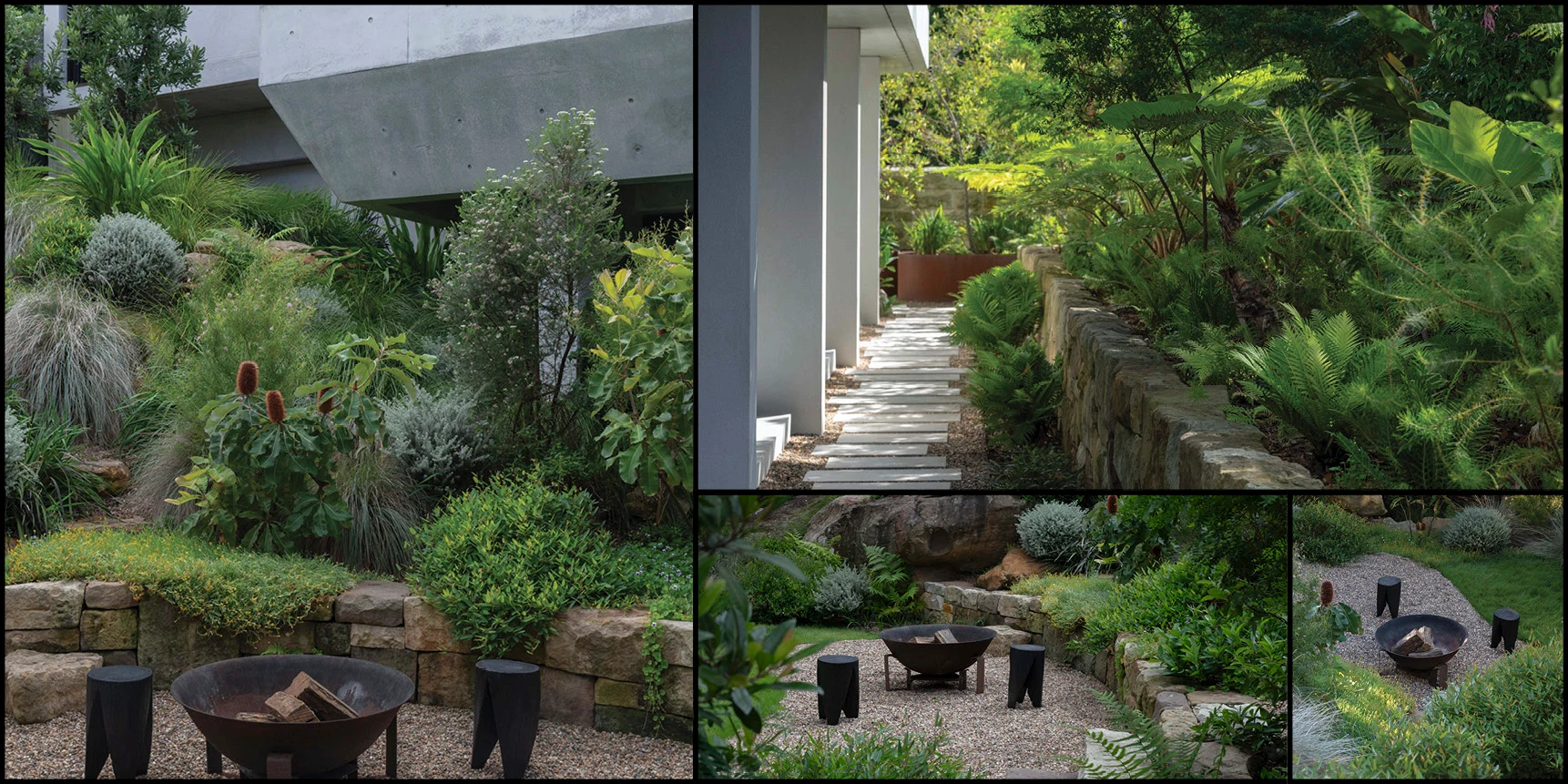
A terraced garden is often suited to steep sites, creating the opportunity for beauty through intentional placement of plants of differing colours and heights. On flat, boxy plots, add interest and that wonderland feel through winding paths and dedicated zones tucked in here and there.
Plants That Belong
Plant-wise, natives are always the best choice, specifically ones local to the Beaches. Every area has its own vegetation community, so if you can smell the salt, hear the ocean, and feel the sea breeze, you’ll need to cater to coastal conditions.Go for dune plants such as Pigface (Carpobrotus glaucescens), Coastal Correa (Correa alba) and Spinifex Grass (Spinifex sericeus).
Likewise, rainforest, woodland, heath, scrub, and any other kind of vegetation community will be most accommodating to its own crew of plants.
Crack open a copy of Native Plants of the Sydney Region by Alan Fairley & Philip Moore, or Field Guide to the Native Plants of Sydney by Les Robinson for the best info on what’s native to your particular community.
The Trees Near Me app can also give a good general overview. In all, ditch the exotics and embrace the local flora that makes the Beaches home.
Groundcovers are the most important step, as they’ll help to outcompete weeds. So much better than mulch, they provide greenery, habitat and oxygen, fueling life.
Go for the native violet (Viola hederacea), kidney-shaped Dichondra repens, and blue-flowered Commelina cyanea, but don’t be fooled by its weedy lookalike, Trad (Tradescantia fluminensis), which produces white flowers.
“Locally appropriate planting is incredibly important to us, particularly on the Beaches where the surrounding environment has such a strong identity,” Matt confirms.
More Than Vegetation
Once you’ve got the landscape formed and the plants settled in, it’s time to add the little touches that make it yours.
A hand-made sculpture in the sunlight, a bench in dappled shade, a birdbath stirred by wingtips. Be sure to provide for your other tenants, too; a possum box, a curl of bark for blue-tongued lizards, or a water bowl for wallabies. will all be well-appreciated by thelocal wildlife.
Because gardening is more than weeding: it’s dedicating love to your land. •
Share this!