.webp)

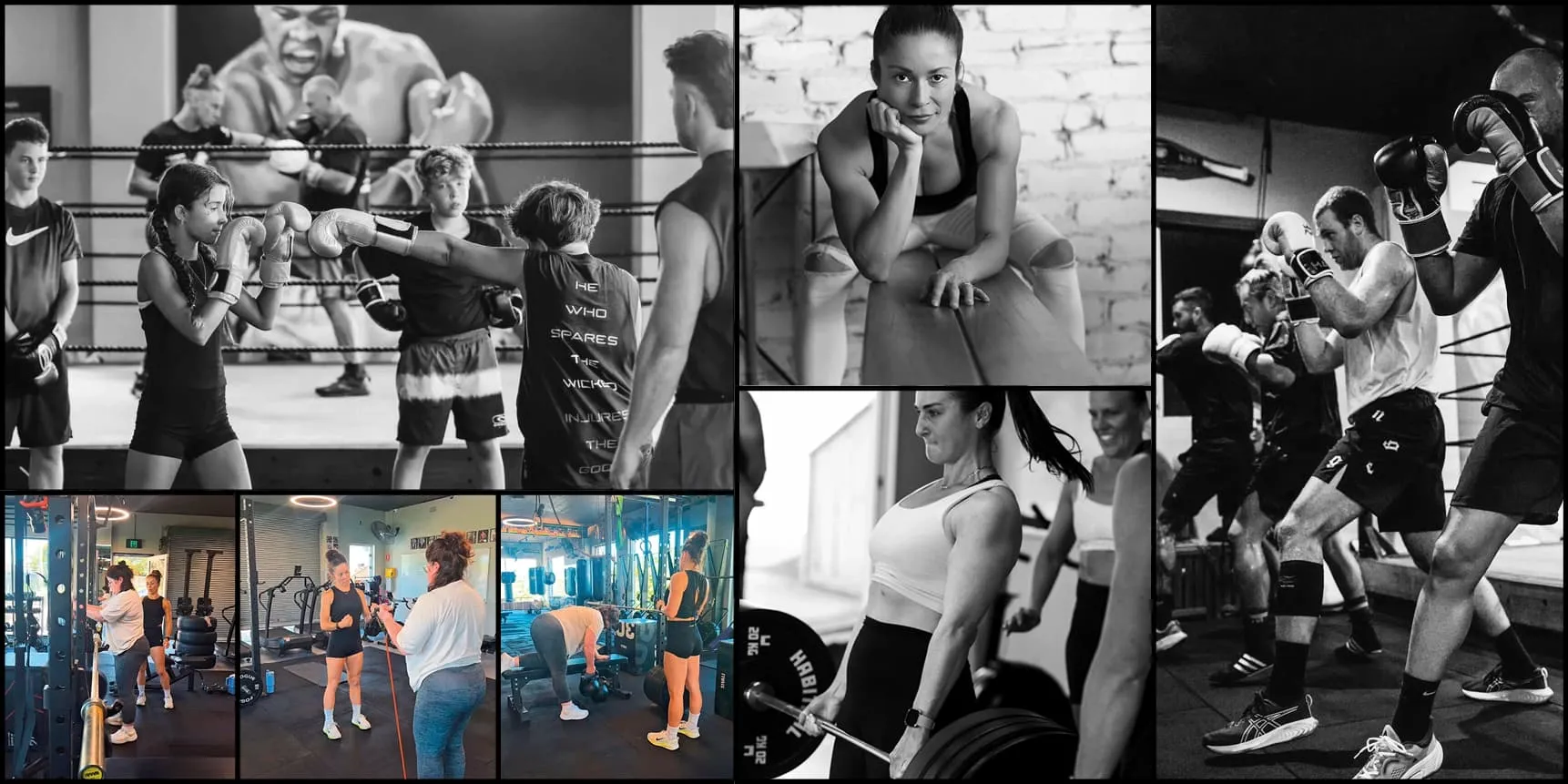
Most of us know we should be doing more. Some of us actually start. Three months ago, Megan, our Creative Director, walked into FORMA Battaglia in Brookvale and began. Now the work is starting to show, and trainer Kristy Curtis explains the method behind the progress.
When Megan first walked through the door, Kristy was not looking at fitness levels. She was looking at movement. How Megan squatted, bent, pushed, pulled and twisted told her where to begin. "Megan has what I call netballer's knees," Kristy says. "Years of playing sport young, combined with wear and tear over time, has created a lot of weakness and instability in her lower body." Add a desk job and you have compromised posture and movement patterns that need rebuilding from the ground up. Rather than treating those limitations as reasons to hold back, Kristy found ways to work around them: step-ups on a low bench with something to hold for balance, squats onto a box for stability. "Too many of us use pain or injuries as a reason why we don't move our bodies. It was really important to me to find ways to show Megan what she could do."
For women in perimenopause, strength training is biological, not just cosmetic. Estrogen and progesterone shifts affect muscle mass directly, and muscle mass affects metabolism, bone density, blood sugar regulation and the ability to manage weight. "Megan is where most women in perimenopause can relate," Kristy says. "She feels little niggles of pain, sluggishness, and has gained weight around her mid-section that's been hard to shift. That's not a willpower issue. That's hormonal." The prescription was two to three strength sessions a week focused on building lean muscle. "By adding lean muscle to Megan's frame, we can switch up her body composition to help reduce inflammation and body fat, and help support her bones and hormones."
Kristy was upfront that the first four to six weeks would deliver the most noticeable progress. "Those first few sessions are like you've been run over by a truck. But as the sessions stacked up, Megan was commenting less about everything hurting." The physical changes followed: better control under load, less wobble when lifting, heavier weights, cleaner form.
FORMA's classes run 30 to 45 minutes, and Kristy is firm on the reasoning. "We want stimulus, not overload. In a 30 to 45 minute session, cortisol rises just enough to drive adaptation. In longer sessions it can stay elevated, which contributes to fatigue and poor recovery. You leave energised, not drained." Megan does two PT sessions a week and adds one to two group classes. "I believe people motivate people, not exercise machines," Kristy says. "The biggest predictor of results isn't the perfect program. It's consistency over time."
For women who feel intimidated walking into a gym, Kristy has a simple message: FORMA is not that gym. "We have 80-year-olds training next to 20-year-olds. Our focus has never been on aesthetics. It's to walk out feeling better than when you walked in." By the end of winter, she wants Megan moving through all her key patterns, bend, pull, push, lunge and twist, with real stability and strength. "Megan is showing up to classes on her own and coming in to do her own workouts. Turning up to a new gym on your own is intimidating for most people. She's doing it."
In Megan's own words: "My clothes are fitting differently, and I've lost centimetres I'd stopped expecting to shift. My energy is up. Stress feels more manageable. Even my confidence has quietly come back, the settled kind, where you feel at home in your body again. If you've been putting it off, this is the sign." FORMA Battaglia is offering a 14-day trial for new members. Find them at 2 Wattle Road, Brookvale, or call 0411 518 525.
Share this!